

Orthodontic Nance Appliance: Advanced Anchorage & Space Control
Maintaining precise multi-dimensional space control during complex transitional dentition stages requires predictable laboratory mechanics and rigid structural stabilization. Indeed, preventing unwanted mesial migration of the maxillary molars remains critical for avoiding secondary arch crowding. Fortunately, implementing a fixed orthodontic nance appliance combination strategy provides clinicians with absolute anchorage control to preserve vital arch perimeter.
Modern digital dental laboratories fabricate highly secure fixed and removable palatal configurations for these development challenges. Specifically, these structural options allow practitioners to stabilize posterior dental units against reactive orthodontic forces. Consequently, you can optimize your active treatment mechanics, prevent space loss, and ensure exceptional clinical outcome predictability.
1. The TPA + Orthodontic Nance Appliance Combination
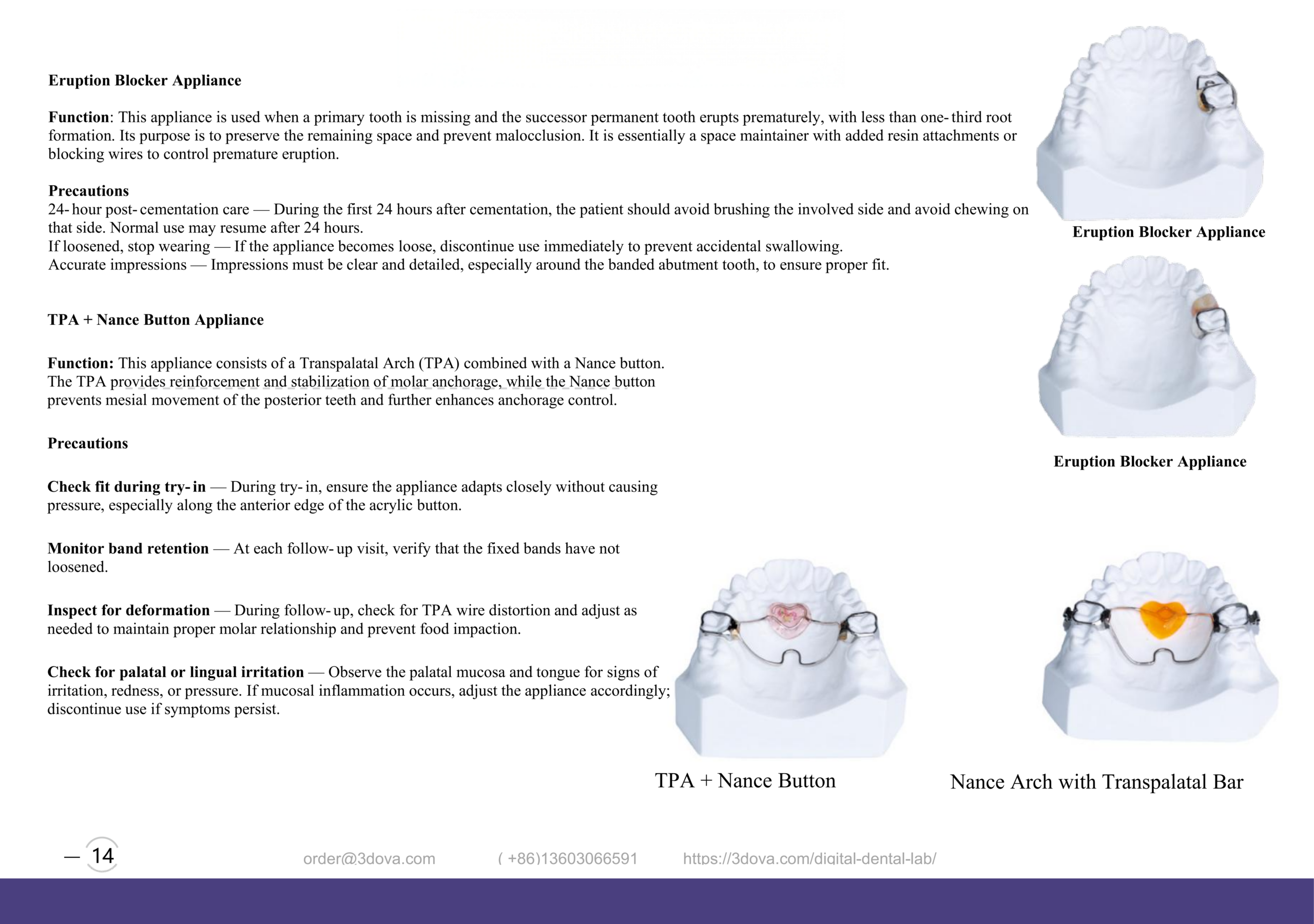
Orthodontists widely prescribe this maximum stabilization layout, which effectively combines a Transpalatal Arch (TPA) with a traditional acrylic Nance button. Structurally, the rigid TPA wire provides essential reinforcement and cross-arch stabilization of the molar anchorage units. Simultaneously, the tissue-borne acrylic orthodontic nance appliance pad rests against the anterior palatal vault. This design successfully blocks any mesial movement of the posterior teeth while maximizing your master anchorage boundary.
Critical Try-In and Monitoring Rules:
First, verify the appliance fit meticulously during the initial try-in appointment. The clinician must ensure the acrylic button adapts closely to the palatal rugae without causing localized blanching or acute pressure. Pay close attention to the anterior edge of the acrylic block to prevent soft tissue impingement.
Second, monitor the structural components diligently at each subsequent follow-up visit. The team must inspect the palatal mucosa and tongue for signs of localized tissue irritation, chronic redness, or indentations. If mucosal inflammation occurs, carefully adjust or relieve the acrylic contours. Furthermore, inspect the wire for distortion to prevent food impaction and verify that the fixed molar bands have not loosened.
2. The Eruption Blocker Appliance
When interceptive care requires localized vertical and positional control rather than broad horizontal anchorage, practitioners implement a custom Eruption Blocker. Clinicians utilize this specialized space maintainer when a primary tooth is prematurely lost and the successor permanent tooth initiates eruption with less than one-third root formation. Essentially, it functions as a targeted space maintainer utilizing added resin attachments or physical blocking wires to control and guide premature eruption patterns.
Post-Cementation and Safety Guidelines:
First, establish strict 24-hour post-cementation protocols with the patient’s family. Advise the patient to avoid brushing the involved quadrant and restrict chewing to the opposite side during the first day. Normal oral hygiene and diet may resume safely after 24 hours.
Second, prioritize patient safety during home care. If the appliance becomes loose or fractures, families must discontinue wear immediately and contact the office to prevent accidental swallowing. Additionally, clinicians must secure highly detailed impressions around the banded abutment teeth to guarantee an optimal laboratory fit.
Streamlining Your Dental Workflows
High-accuracy lab production is a cornerstone of preventing space loss and minimizing chairside adjustments. For this reason, modern digital workflows can significantly enhance clinical outcomes. To expand your knowledge, you can study more about early interceptive anchorage guidelines by visiting authoritative industry resources like the American Association of Orthodontists and the Journal of Clinical Orthodontics.
Are you ready to optimize your chairside workflows? You can upload your digital intraoral STL scans directly through our secure 3DOVA Digital Lab Platform. Additionally, feel free to explore our complete catalog of custom fixed and removable orthodontic configurations online.
Leave a Reply