

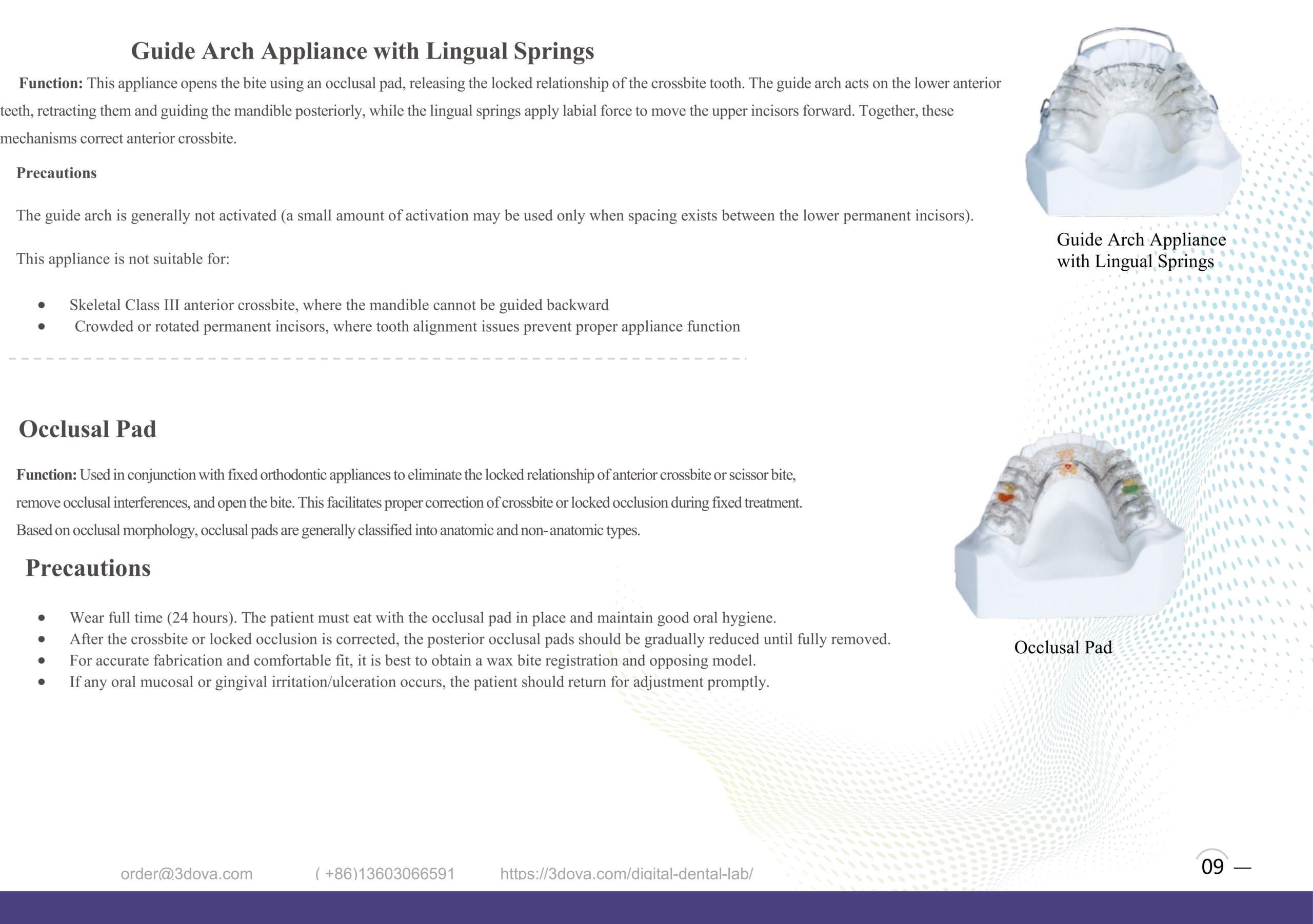
Orthodontic Occlusal Pad: Interceptive Crossbite Correction
Correcting anterior dental crossbites in early mixed dentition requires immediate, reliable biomechanical intervention. Failing to treat these issues early can cause localized periodontal damage or unwanted functional shifts. Fortunately, selecting an orthodontic occlusal pad configuration allows clinicians to achieve rapid, highly predictable interceptive results.
Modern digital dental laboratories fabricate highly effective setups for these pediatric challenges. These options integrate specialized clinical designs to unlock trapped anterior teeth smoothly. Consequently, you can accelerate your active treatment timelines and significantly improve client satisfaction.
1. Guide Arch Appliance with Lingual Springs
Orthodontists widely prescribe this combination appliance alongside an integrated orthodontic occlusal pad for early interceptive correction. This specific layout opens the bite to release the locked relationship of the crossbite tooth. Simultaneously, the specialized guide arch acts on the lower anterior teeth. This action retracts them and dynamically guides the mandible posteriorly.
Meanwhile, active lingual springs apply continuous labial force to move the upper incisors forward. Together, these smooth mechanical forces correct the anterior crossbite efficiently.
Critical Clinical Selection and Verification Rules:
First, you must evaluate patient suitability carefully before manufacturing. This specific design is not suitable for skeletal Class III anterior crossbites where the mandible cannot be guided backward. Furthermore, avoid using it if the patient presents with severely crowded or rotated permanent incisors.
Second, the clinician generally does not activate the main guide arch wire. You may apply a small amount of activation only when physical spacing exists between the lower permanent incisors.
2. Clinical Application of the Standalone Orthodontic Occlusal Pad
Practitioners frequently utilize a standalone orthodontic occlusal pad in conjunction with fixed orthodontic appliances. This setup eliminates the locked relationship of an anterior crossbite or scissor bite. Additionally, it removes occlusal interferences and opens the bite to facilitate proper correction during fixed treatment.
Based on individual patient dental morphology, modern laboratories classify these temporary structures into anatomic and non-anatomic types.
Critical Delivery and Maintenance Rules:
First, prescribe full-time wear for 24 hours. The pediatric patient must eat meals with the bite modification in place and maintain excellent oral hygiene.
Second, monitor the correction closely at every office visit. After the crossbite or locked occlusion resolves, you should gradually reduce the posterior surfaces until they are fully removed.
Finally, capture precise physical or digital records for manufacturing. It is always best to obtain a wax bite registration alongside an opposing model to ensure a comfortable fit.
Streamlining Your Dental Workflows
High-accuracy lab production prevents unexpected relapse and shortens total treatment time. For this reason, modern digital workflows can vastly improve your everyday clinical outcomes. You can study more about early interceptive guidelines by visiting authoritative industry resources like the American Association of Orthodontists and the Journal of Clinical Orthodontics.
Are you ready to optimize your chairside seat times? Please submit your digital or analog impressions directly to our qualified technician team. Additionally, you can explore our complete line of modern orthodontic configurations at the official 3DOVA Digital Lab Platform.
Leave a Reply