

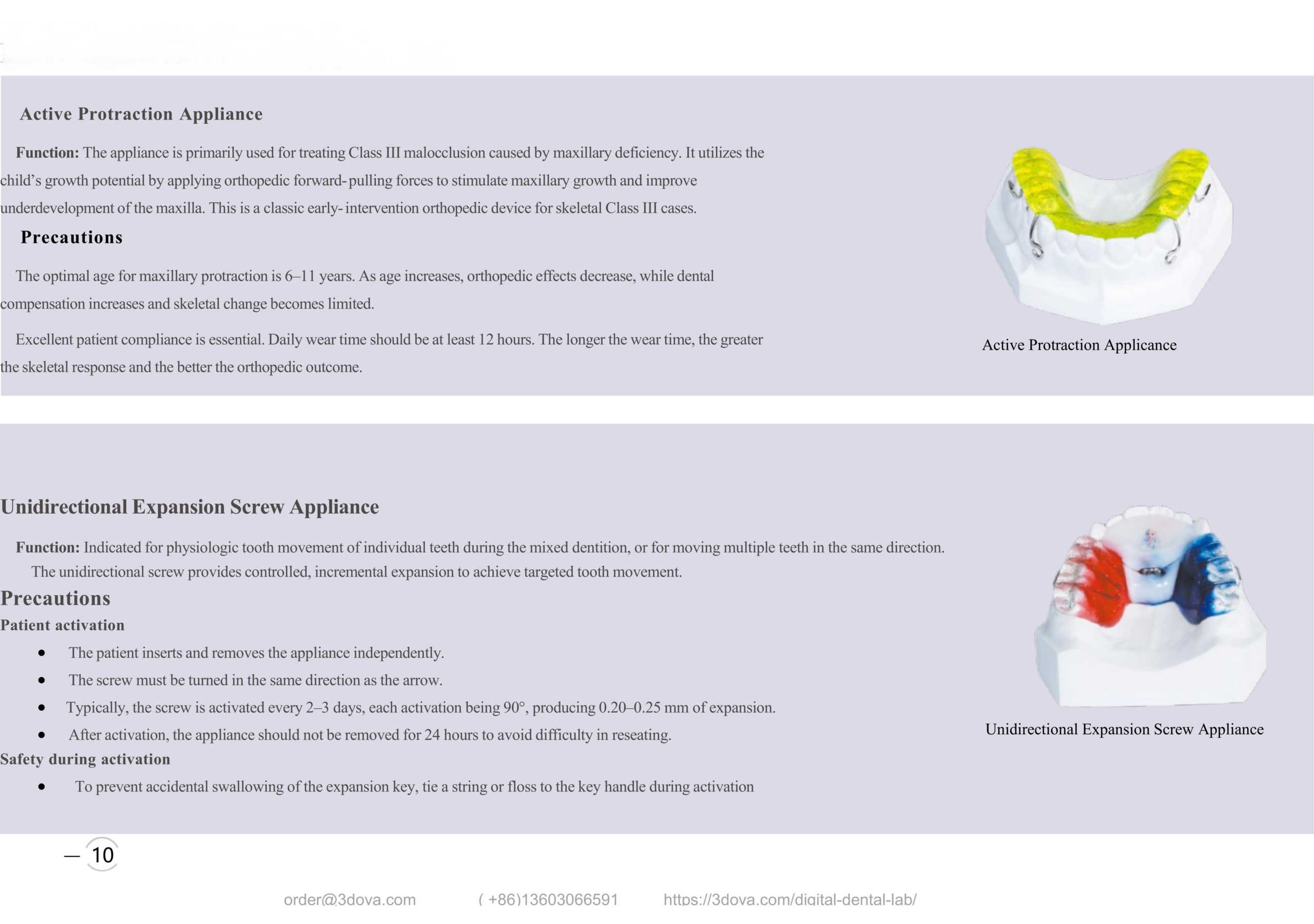
Maxillary Expansion Appliance: Skeletal Class III Orthopedic Guide
Interceptive orthopedic treatment for young patients with developing skeletal discrepancies requires precise clinical timing and highly reliable laboratory construction. Indeed, addressing structural midface deficiencies early allows clinicians to maximize growth potential before sutures fuse. Fortunately, selecting a targeted maxillary expansion appliance strategy yields highly predictable results for skeletal Class III and crowded dental presentations.
Modern digital dental laboratories fabricate advanced custom setups to address these early-intervention challenges. Specifically, these structural options allow clinicians to apply precise vectors of mechanical force. Consequently, you can optimize orthopedic changes, reduce treatment timelines, and ensure exceptional stability.
1. The Active Protraction Appliance
Orthodontists widely prescribe this specialized maxillary expansion appliance configuration to treat Class III malocclusions stemming from true maxillary deficiency. This classic device effectively utilizes the child’s growth potential. It applies orthopedic forward-pulling forces to stimulate bone development and correct midface retrognathism.
Clinical and Diagnostic Considerations:
First, evaluate patient age carefully before prescribing therapy. The optimal windows for skeletal maxillary protraction generally occur during the early to middle mixed dentition stages. As skeletal maturity increases, the potential for orthopedic change naturally decreases, and clinicians may observe more dental compensation rather than skeletal correction.
Second, reinforce the importance of patient compliance. Consistent wear is essential for achieving the desired orthopedic response. Families should be instructed on a rigorous daily wear schedule as determined by the clinical objectives to ensure a stable and superior outcome.
2. The Unidirectional Expansion Screw Appliance
When treatment requires localized arch development, practitioners implement a maxillary expansion appliance equipped with a unidirectional screw mechanism. This tool is indicated for the physiologic tooth movement of individual units during the mixed dentition phase. Furthermore, it works effectively for moving multiple teeth in a coordinated direction. The built-in screw provides controlled, incremental expansion to safely achieve targeted dental positions.
Patient Activation and Safety Guidelines:
First, establish clear communication regarding home care. Patients and guardians must be trained by the clinical team to handle the device properly. Activation of the expansion screw should follow the specific professional protocol provided by the orthodontist, ensuring that adjustments are made in the correct sequence and direction.
Second, manage post-activation protocols to ensure patient comfort and appliance fit. Following an adjustment, consistent wear is necessary to allow the supporting tissues to adapt and to prevent seating difficulties associated with minor tooth movement.
Finally, prioritize safety during all adjustments. Clinicians should demonstrate safe handling of the activation key and recommend precautions, such as securing the key with a safety tether, to prevent accidental ingestion or displacement during the activation process.
Streamlining Your Dental Workflows
High-accuracy lab production is a cornerstone of preventing relapse and shortening total treatment time. For this reason, modern digital workflows can significantly enhance clinical outcomes. To expand your knowledge, you can study more about early interceptive guidelines by visiting authoritative industry resources like the American Association of Orthodontists and the Journal of Clinical Orthodontics.
Are you ready to optimize your chairside workflows? Digital or analog impressions can be submitted directly to our technician team. Additionally, complete lines of modern orthodontic configurations can be explored through professional 3dova digital lab platforms.→ order@3dova.com
Leave a Reply