
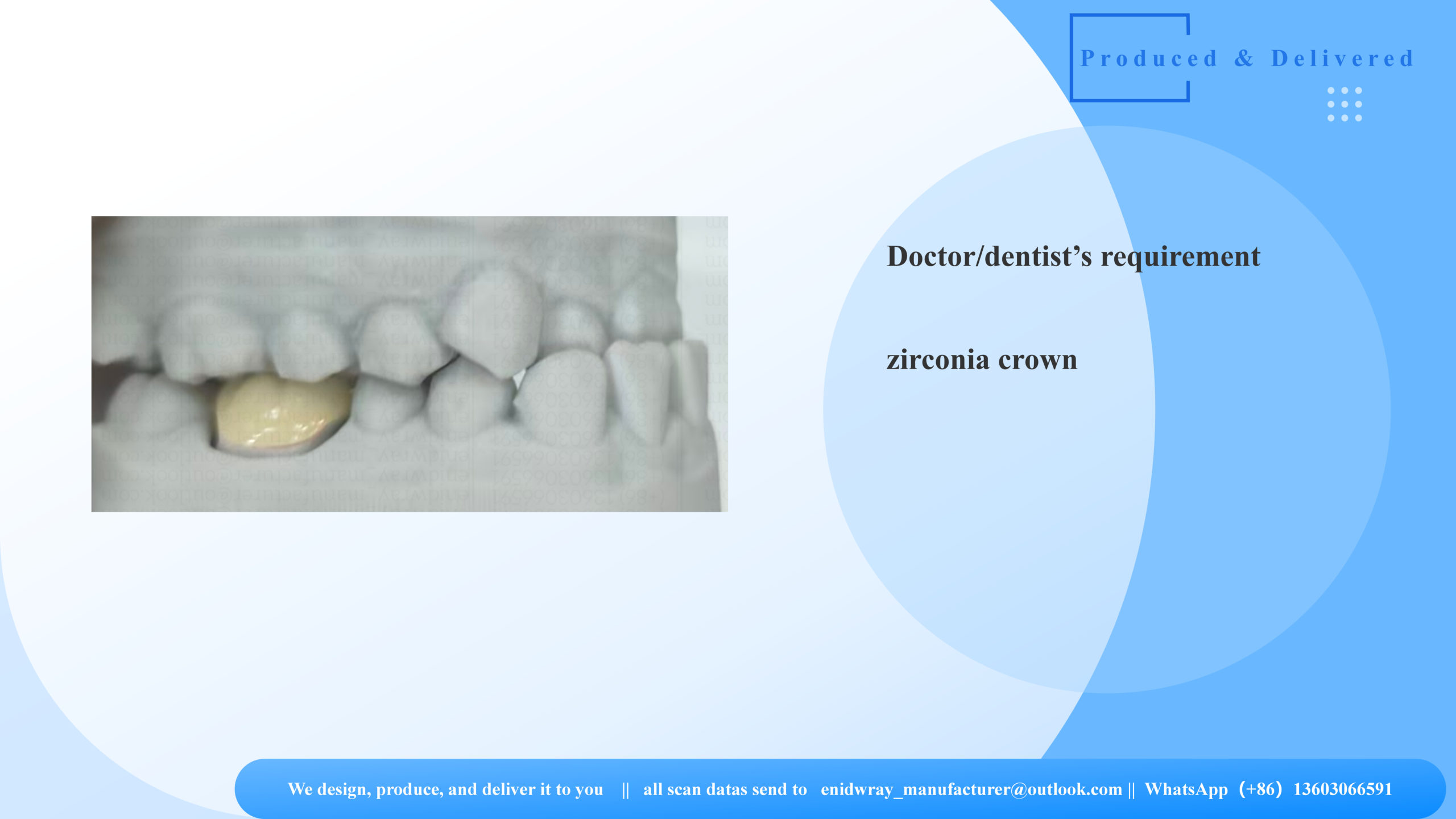
Our zirconia crown bridge restorations combine the strength of zirconia with the natural beauty of porcelain. Designed for patients seeking metal-free, long-lasting solutions, this CAD/CAM-compatible option offers precision, biocompatibility, and aesthetic excellence.
Porcelain-zirconia crowns are a powerhouse in modern restorative dentistry—especially when you need to balance aesthetics, durability, and biocompatibility.
Key Features of Zirconia Crown Bridges
- High Strength: Zirconia core resists fracture and wear—ideal for molars and bruxism cases
- Porcelain Layering: Mimics enamel translucency for anterior restorations
- Biocompatibility: 100% metal-free and hypoallergenic
- Minimal Tooth Reduction: Strong enough for conservative prep
- Longevity: Proven to last 10–15+ years with proper care
- Digital Workflow: Compatible with CAD/CAM and same-day milling
| Feature | Benefit |
| High Strength | Zirconia’s ceramic core resists fracture and wear—ideal for molars and bruxism cases |
| Natural Aesthetics | Porcelain layering mimics enamel translucency, making it suitable for anterior restorations |
| Biocompatibility | Metal-free and hypoallergenic—safe for patients with sensitivities |
| Minimal Tooth Reduction | Strong enough to allow conservative prep, preserving more natural tooth structure |
| Long-Term Durability | Proven to last 10–15+ years with proper care, even under heavy occlusal load |
| CAD/CAM Compatibility | Enables digital design and same-day milling in clinics with in-house systems |
- Clinical applications: molars, bruxism, anterior restorations
Material Comparison: Zirconia vs. PFM vs. Full Ceramic
| Feature | Zirconia | PFM (Porcelain-Fused-to-Metal) | Full Ceramic (e.g., E-Max) |
|---|---|---|---|
| Strength | ★★★★★ Extremely high (up to 1200 MPa) | ★★★★ Strong metal core, but porcelain prone to chipping | ★★★ Moderate; best for anterior teeth |
| Aesthetics | ★★★★ High translucency (especially layered zirconia) | ★★ Limited due to opaque metal substructure | ★★★★★ Excellent translucency and shade match |
| Biocompatibility | ★★★★★ Hypoallergenic, metal-free | ★★ Risk of allergic reactions (nickel, cobalt) | ★★★★★ Metal-free and tissue-friendly |
| Longevity | ★★★★★ 10–15+ years with proper care | ★★★★ Proven durability over decades | ★★★ Typically 8–10 years |
| Digital Workflow | ★★★★★ Fully CAD/CAM compatible | ★★ Mostly manual porcelain layering | ★★★★ CAD/CAM compatible |
| Chairside Adjustments | Minimal due to precision fit | Moderate; porcelain may require reshaping | Minimal; good fit but fragile under stress |
| Ideal Use Cases | Posterior crowns, bruxism, bridges | Mixed cases, long-span bridges | Anterior veneers, single-unit crowns |
| Cost Efficiency | Moderate to high (depends on type) | Moderate; alloy cost varies | Higher for multilayered esthetics |
√ Strategic Insights
- Zirconia is your go-to for strength, digital precision, and metal-free marketing. Ideal for molars, bruxism cases, and clinics using intraoral scanners.
- PFM remains relevant for long-span bridges and budget-conscious markets, especially where metal durability is valued.
- Full Ceramic (E-Max) is perfect for aesthetic-driven clinics, smile design cases, and anterior restorations.
√Related Products
Full Zirconia Crown https://3dova.com/porcelain-zirconia-crown-bridge/
PFM 3D Printing Crown Bridgehttps://3dova.com/pfm-3d-printing-crown-bridge/
E-Max Veneerhttps://3dova.com/e-max-veneer-smile-design/
Biocompatibility Research – PubMed https://pubmed.ncbi.nlm.nih.gov/