

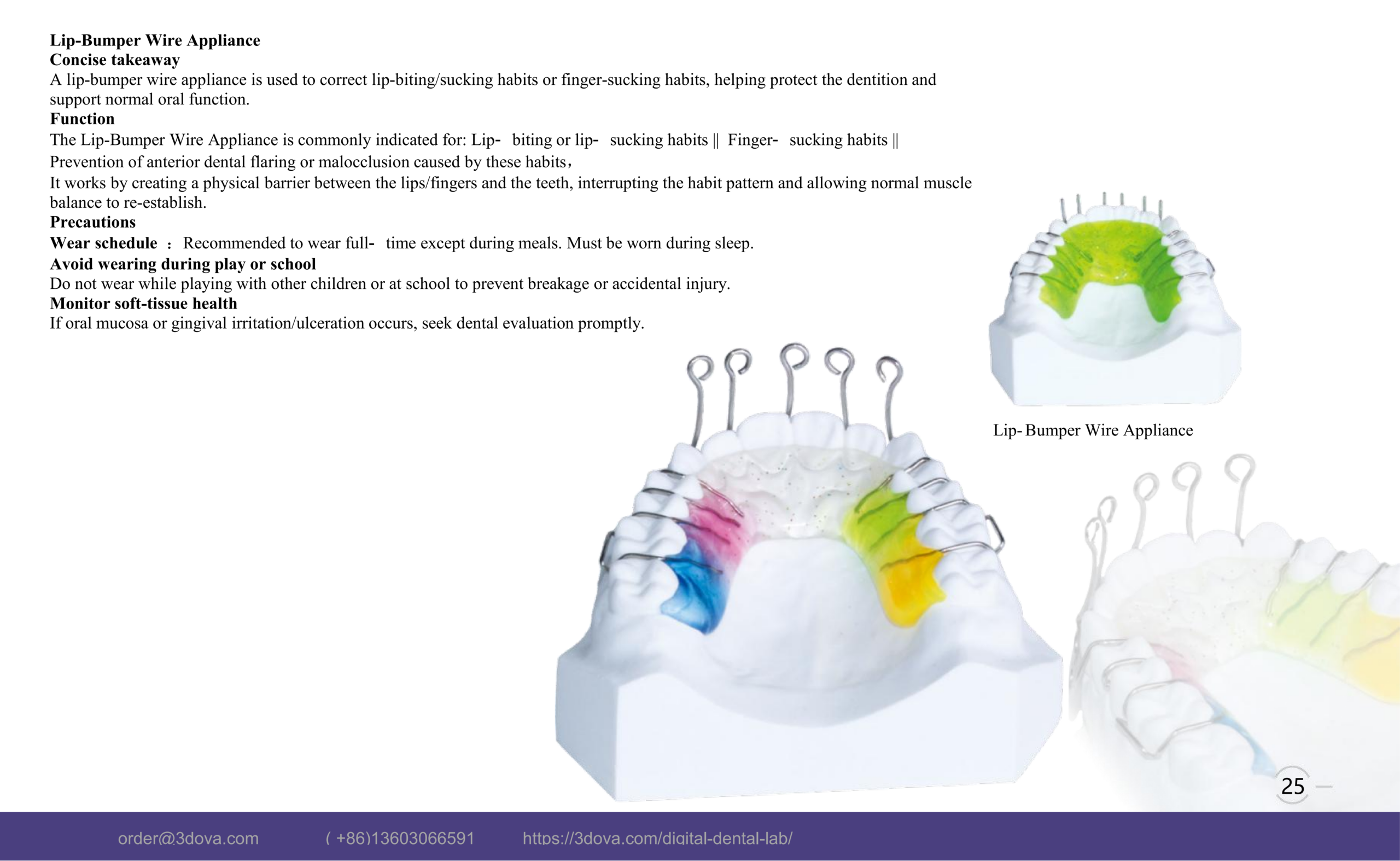
Lip Bumper Appliance: Advanced Treatment for Oral Habits
Managing persistent childhood parafunctional behaviors like lip biting or thumb sucking during mixed dentition stages requires immediate, reliable structural interception. Indeed, failing to intercept these muscle imbalances early can cause severe anterior dental flaring, localized crossbites, or severe malocclusions. Fortunately, selecting a custom lip bumper appliance strategy provides clinicians with a robust physical barrier that effectively protects the dentition and prompts normal soft-tissue function.
Modern digital dental laboratories fabricate highly precise wire-frame and acrylic-supported layouts for these early development challenges. Specifically, these custom options shield anterior teeth from destructive muscle forces while allowing natural dental alignment. Consequently, you can accelerate active interceptive treatment timelines, prevent adverse skeletal changes, and significantly improve overall outcome predictability.
1. Biomechanics of the Removable Lip Bumper Appliance
Orthodontists widely prescribe a lip bumper appliance as a premier interceptive tool to eliminate persistent lip-sucking or finger-sucking patterns. Mechanically, the specialized labial wire arches create a physical boundary between the lips, fingers, and anterior dental segment. This structural layout breaks the deeply ingrained habit cycle cleanly. Furthermore, by neutralizing continuous perioral muscle pressures, it allows normal physiological muscle balance to re-establish across the dental arches.
Critical Wear and School Monitoring Rules:
First, establish a strict daily wear routine straight from delivery. The pediatric patient should wear the hardware full-time, making use mandatory during sleep. However, to prevent accidental damage, the child must remove the appliance while eating meals.
Second, enforce clear lifestyle safety precautions. Warn families that the child must avoid wearing the hardware during active sports, play, or while at school. Taking this step successfully minimizes the risk of accidental breakage, appliance loss, or intraoral trauma.
2. Maintaining Tissue Health & Framework Integrity
Because custom wire-frame frameworks sit in close proximity to sensitive oral mucosa, proactive clinical tracking is critical to treatment success. Plaque accumulation or active wire distortion can cause localized tissue problems if left unchecked. Therefore, clinicians must implement consistent evaluation protocols during every follow-up appointment.
Essential Clinical Verification Steps:
First, inspect the palatal and labial soft tissues carefully at every single recall visit. The clinician must check for signs of localized tissue irritation, chronic redness, or indentations. If mucosal inflammation or deep ulceration occurs, the patient should seek a dental evaluation promptly for wire adjustments.
Second, verify the structural integrity of the labial loops. Ensure the patient maintains pristine oral hygiene and check that the wire frame has not warped, preserving a comfortable, therapeutic fit.
Streamlining Your Dental Workflows
High-accuracy lab production is a cornerstone of preventing appliance distortion and reducing unexpected emergency office visits. For this reason, modern digital workflows can vastly improve your everyday clinical outcomes. To expand your knowledge, you can study more about early myofunctional interceptive guidelines by visiting authoritative industry resources like the American Association of Orthodontists and the Journal of Clinical Orthodontics.
Are you ready to optimize your chairside workflows? You can send your request directly to order@3dova.com. Additionally, feel free to explore our complete online catalog of custom fixed, removable, and habit-breaking orthodontic configurations.
Leave a Reply