

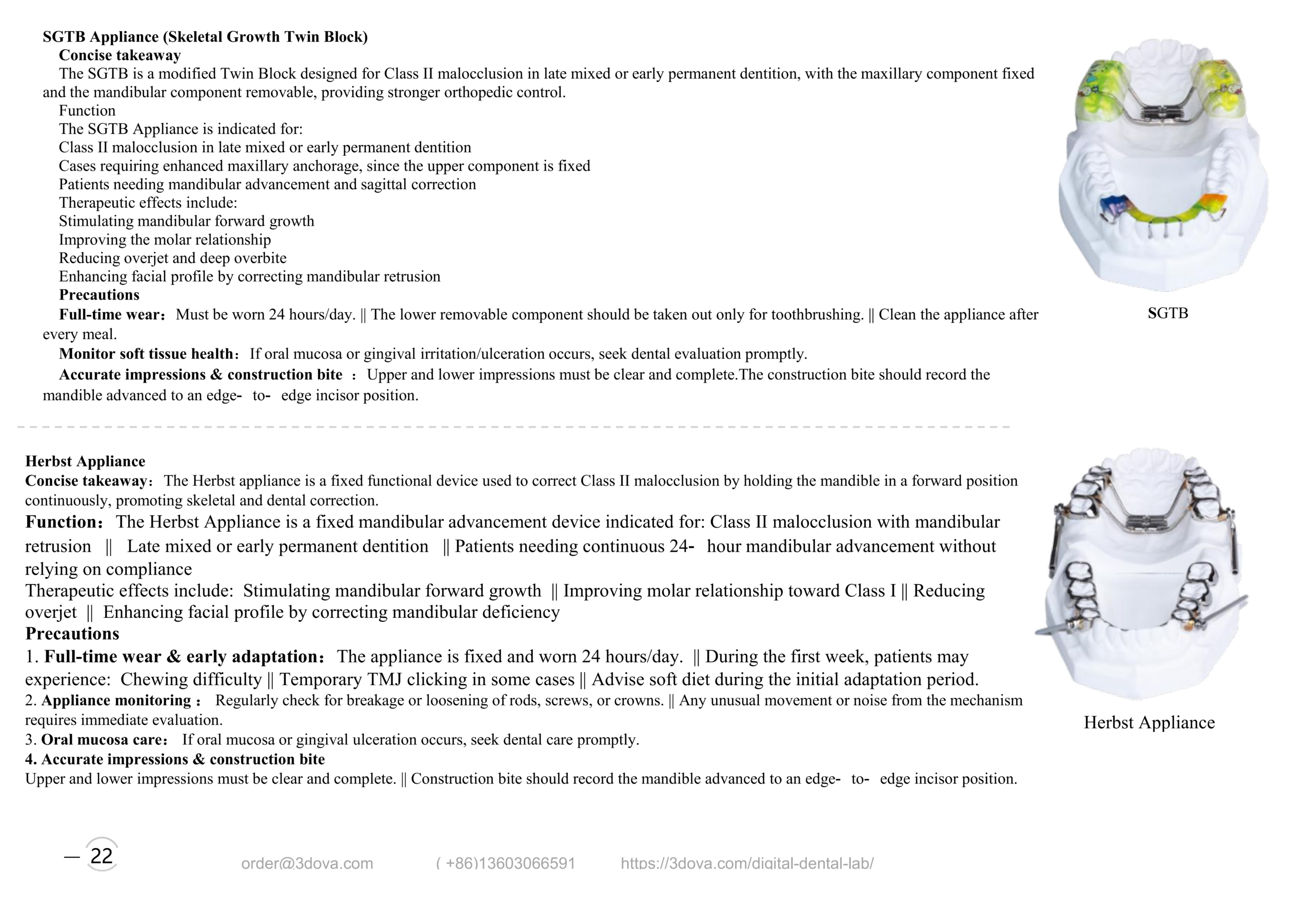
Herbst Appliance: Advanced Non-Compliance Class II Correction
Managing severe skeletal Class II malocclusions in late mixed or early permanent dentition requires rigid, continuous advancement mechanics. Indeed, standard removable devices often fall short if patient compliance remains inconsistent during critical growth windows. Fortunately, implementing a fixed Herbst appliance strategy provides clinicians with a highly predictable, 24-hour skeletal advancement protocol that bypasses compliance barriers entirely.
Modern digital dental laboratories fabricate highly robust telescopic mechanics to handle heavy functional workloads. Specifically, these advanced structural configurations securely hold the mandible forward to optimize orthopedic orthopedic remodeling. Consequently, you can accelerate active treatment timelines, improve profile harmony, and achieve exceptional clinical outcomes.
1. Biomechanics of the Fixed Herbst Appliance
Orthodontists widely prescribe the Herbst appliance as a premier fixed mandibular advancement device for patients experiencing pronounced mandibular retrusion. Because the telescopic rod-and-tube mechanism is securely cemented to the dentition, it provides uninterrupted, 24-hour therapeutic force. This persistent mechanical guidance stimulates forward mandibular growth, shortens overjet, and alters the molar relationship toward a stable Class I occlusion.
Critical Adaptation and Appliance Monitoring Rules:
First, prepare the patient for an initial adaptation period directly after cementation. During the first week of full-time wear, patients may experience minor chewing difficulties or temporary TMJ clicking. Therefore, advise a soft diet to ensure an easier transition.
Second, perform regular structural clinical checks at each office visit. The team must carefully inspect the telescopic rods, screws, and anchor crowns for any signs of loosening or fatigue. Any unusual movement or mechanism noise requires immediate clinical evaluation.
Finally, safeguard soft tissue health diligently. If localized oral mucosa or gingival ulceration occurs from the hardware, adjust or relieve the local components promptly to prevent deep tissue injury.
2. The SGTB Appliance (Skeletal Growth Twin Block)
When a clinician prefers a hybrid layout over a fully fixed telescopic device, they choose the Skeletal Growth Twin Block (SGTB). This modified configuration incorporates a fixed maxillary component to enhance anchorage control, paired with a removable mandibular component. Clinicians utilize the SGTB appliance for late mixed dentition cases requiring robust sagittal advancement with maximum skeletal stability.
Essential Impressions and Seating Guidelines:
First, enforce a strict 24-hour daily wear schedule for the removable mandibular piece, removing it only during toothbrushing. The patient must clean the apparatus thoroughly after every single meal to maintain pristine oral health.
Second, capture highly detailed physical or digital impressions during case preparation. Upper and lower models must be complete, clear, and perfectly stable. Crucially, capture the construction bite registration with the mandible advanced into an edge-to-edge incisor position to ensure proper laboratory fabrication.
Streamlining Your Dental Workflows
High-accuracy lab production is essential for ensuring smooth telescopic movement and minimizing chairside emergency visits. For this reason, modern digital workflows can vastly improve your everyday clinical outcomes. To expand your knowledge, you can study more about functional interceptive guidelines by visiting authoritative industry resources like the American Association of Orthodontists and the Journal of Clinical Orthodontics.
Are you ready to optimize your chairside fixed advancement workflows? You can send your request to order@3dova.com. Additionally, feel free to explore our complete online catalog of custom fixed, removable, and functional orthodontic configurations.
Leave a Reply